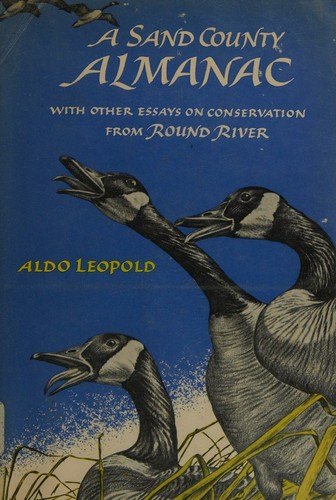
Presented by Alex at the December 2025 meeting
A Sand County Almanac
- Published 1949
- Non-fiction
- 269 pages
- Alex5
In brief
Barbara Kingsolver's intro convinced me. She reads it every year. "Well into the 1990's many conservatives idenfied as environmentalists...". Another Thoreau or Rachel Carson.
From the publisher
First published in 1949 and praised in The New York Times Book Review as a trenchant book, full of vigor and bite, A Sand County Almanac combines some of the finest nature writing since Thoreau with an outspoken and highly ethical regard for Americas relationship to the land. Written with an unparalleled understanding of the ways of nature, the book includes a section on the monthly changes of the Wisconsin countryside; another part that gathers informal pieces written by Leopold over a forty-year period as he traveled through the woodlands of Wisconsin, Iowa, Arizona, Sonora, Oregon, Manitoba, and elsewhere; and a final section in which Leopold addresses the philosophical issues involved in wildlife conservation. As the forerunner of such important books as Annie Dillards Pilgrim at Tinker Creek, Edward Abbeys Desert Solitaire, and Robert Finchs The Primal Place, this classic work remains as relevant today as it was forty years ago.
From Wikipedia
A Sand County Almanac: And Sketches Here and There is a 1949 non-fiction book by American ecologist, forester, and environmentalist Aldo Leopold. Describing the land around the author's home in Sauk County, Wisconsin, the collection of essays advocate Leopold's idea of a "land ethic", or a responsible relationship existing between people and the land they inhabit. Edited and published by his son, Luna, a year after Leopold's death, the book is considered a landmark in the American conservation movement. Interspersed throughout the book are illustrations by American wildlife artist Charles W. Schwartz.
The book has had over two million copies printed and has been translated into at least fourteen languages. It has informed and changed the environmental movement and stimulated a widespread interest in ecology as a science.